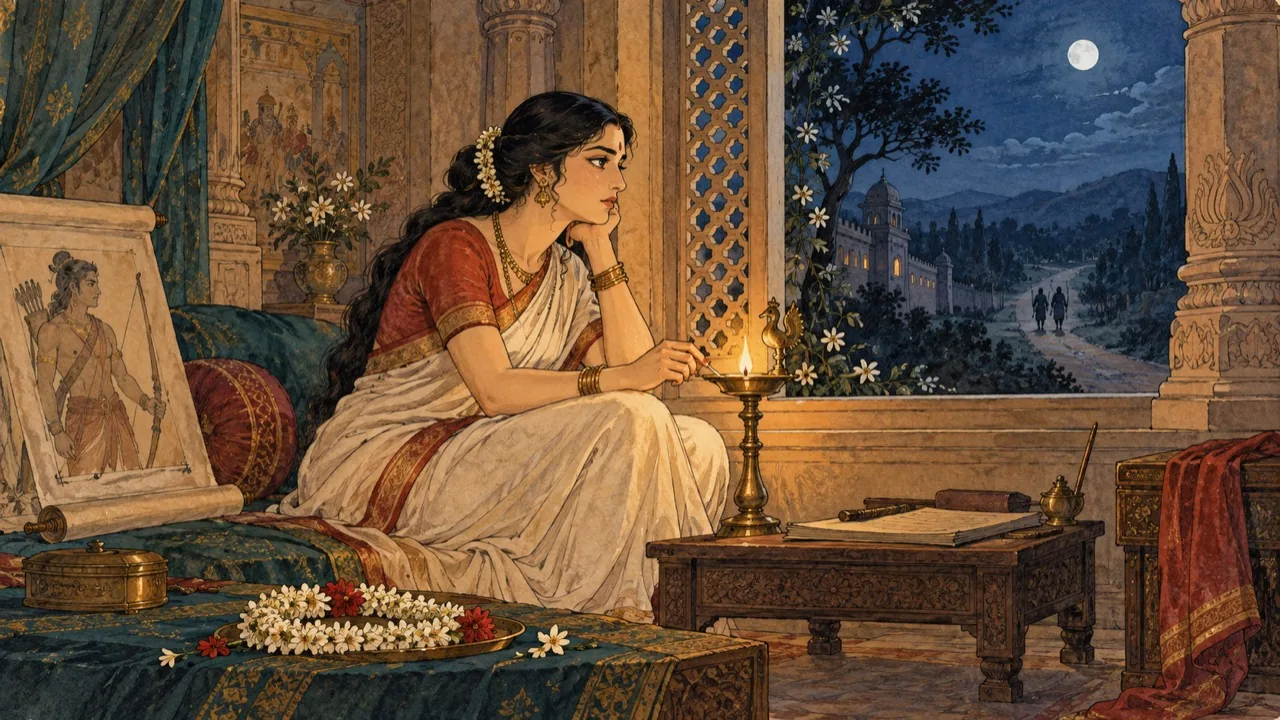
In Ayodhya, the bustle of a coronation turned into the silence of exile within a single night. When Lakshmana decided to follow Rama into the forest, Urmila saw the urgency in his eyes. She also saw his fear that she might ask him to stay. Her only question was, “Does this journey rise from anger, or from duty?” Lakshmana lowered his head. “It is my duty to stand beside my brother and Sita.” Grief flashed through Urmila, but she would not use her tears to weaken his resolve. “Then go,” she said. “Only make sure that your service never becomes another burden for them to carry.”
At their farewell, Urmila asked for no grand promise. She did not demand that he remember her at every full moon. She said she would care for the grief of the three queens—Kausalya, Sumitra, and Kaikeyi—because the duty left inside the palace was as real as the duty carried into the forest. Lakshmana tried to speak, but the word “forgive me” stopped at his lips. Urmila placed a small oil lamp in his hands. “Light this when the forest feels dark. I will light another here. Both flames will serve the same home.” She stood at the gate until the sound of the chariot wheels disappeared. Only then did she allow herself to weep.
A QUIET PAUSE
Which promise feels hardest to carry in this farewell?
There is no right answer. Notice what the story brings up for you.
Days became months. Ayodhya sang of the three who had entered the forest. Urmila spent mornings with the queens, afternoons hearing the concerns of women in the kingdom, and nights drawing beside the bow Lakshmana had left behind. Every painting held a road: one leading into the forest, one returning home, and a third that no one had yet walked. One sleepless night, Kausalya came to her room. Urmila did not search for consoling words. She poured milk into two cups and placed a painting between them. They remained there together until dawn.
News from the forest was rare, but rumors travelled quickly. One day people whispered of an attack by rakshasas; another day they said Sita could not be found. The palace trembled at every report. Urmila felt fear too, yet she refused to let fear issue orders. She waited for truth and prepared for what might be needed. One night Sumitra asked, “Will you never speak of your own sorrow?” Urmila adjusted the lamp wick. “Silence is not strength, Mother. Sorrow must be spoken before the right person. I will weep with you; outside this room, I will stand.” Sumitra rested a hand on her head. From then on, the quiet between them was no longer loneliness. It was companionship.
A QUIET PAUSE
When grief enters a family, which strength matters first?
There is no right answer. Notice what the story brings up for you.
At the end of the fourteenth year, flower garlands appeared again in Ayodhya’s streets. Rama, Sita, and Lakshmana were returning. While the city rushed forward, Urmila paused. The Lakshmana she had held in memory was a young man; the person coming home had been changed by battle, sleepless nights, and responsibility. He stood before her without words. At last he said, “I left you a burden and did not even give it a name.” Urmila smiled. “You guarded them in the forest. I guarded the home to which you had to return. We kept the same vow in two places.” That night they lit the two lamps side by side.
The next morning, Lakshmana found the paintings Urmila had made. He stopped at the third road that appeared in every one. “Where does this road lead?” he asked. Urmila placed the brush in his hand. “People return, but not as the people who left. Those who waited have changed too. We will have to draw this road together.” Lakshmana added two small lamps to the painting. When Sumitra called from the next room, they rose together. At the threshold, the lamps that had burned through the night still held a little oil.